
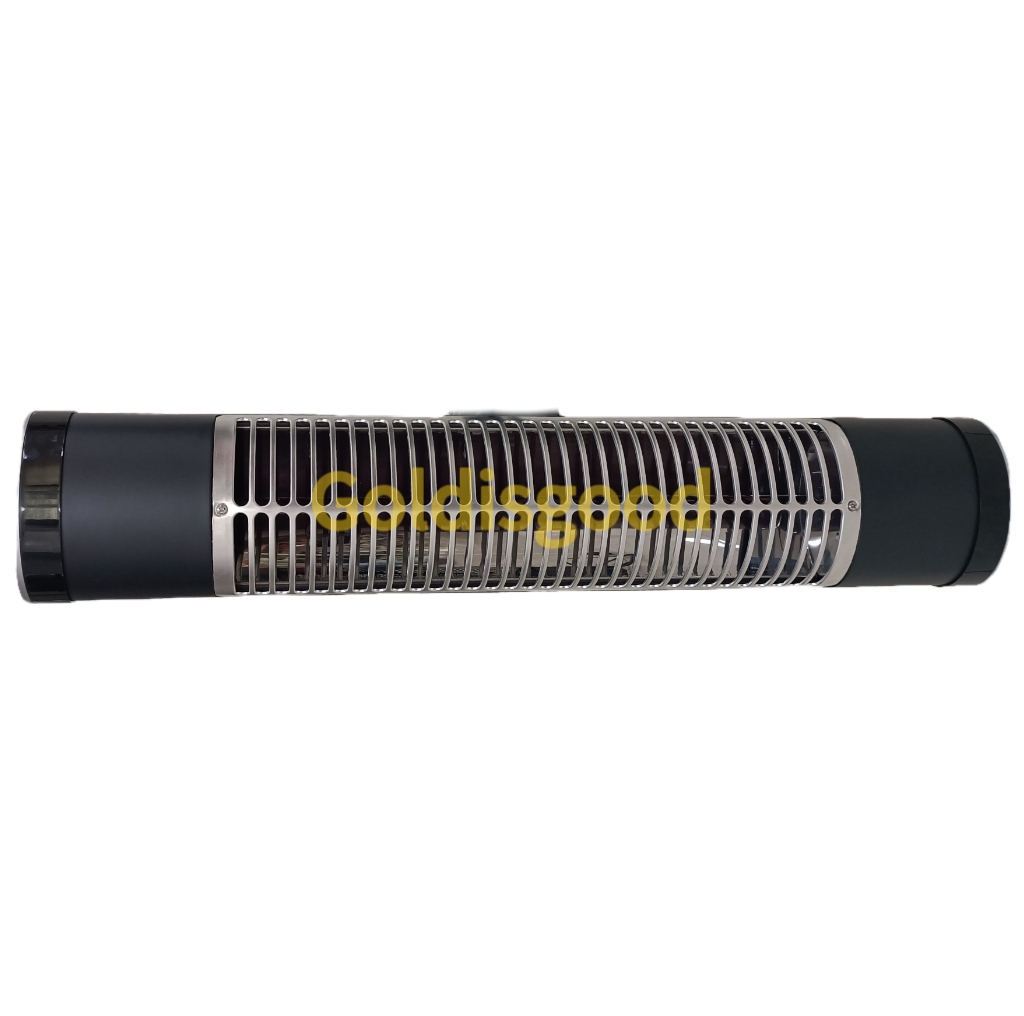
Why Your Ceiling Heater Actually Dies (And How We Fixed It)
If you’ve ever had a workshop heater kick the bucket, you probably assumed the heating element just burnt out. But here’s the thing: that’s rarely the real culprit. Most of the time, the failure happens right where the lead-wire connects to the tube. In those high-output infrared systems, that little junction becomes a total heat trap. If the seal isn’t perfect, oxygen sneaks in. Once that happens, the metal starts to oxidize and the insulation just… cracks. The problem with the cheap stuff Most mass-market heaters are held together with basic adhesives or some low-grade silicone. That stuff just can’t handle a ceiling mount. Heat rises, it concentrates, and it beats down on those materials. Eventually, the sealant shrinks or peels. This creates a “breathing” effect. Every time you flip the switch, the seal expands and contracts, sucking moisture and grime right into the terminal. Before you know it, you’ve got carbon tracking and a dead short. How we do it differently We decided to stop gluing things and start engineering them. We use a compression-sealing technique you normally only find in high-end industrial gear. Instead of a dab of glue, we use a multi-layer ceramic-to-metal seal. It creates a mechanical bond that expands and contracts at the exact same rate as the tube. It stays tight. We also swapped out the standard wiring for high-temp fluoropolymer and fiberglass braiding. But we don’t just wrap the wires—we embed them. This means when the unit hits peak temperature, nothing shifts. No rubbing against sharp metal edges, no fraying. Just a solid connection. The honest trade-off Now, there is a catch. Because this seal is so tight, these units are a pain to repair in the field. You can’t just strip a wire and slap some solder on it if you mess up the install. If the lead assembly goes, you replace the whole thing. But honestly? For a heater hanging on a ceiling where you don’t want to be climbing a ladder every six months to check the wiring, it’s a trade worth making. You get a system that actually survives the winter.